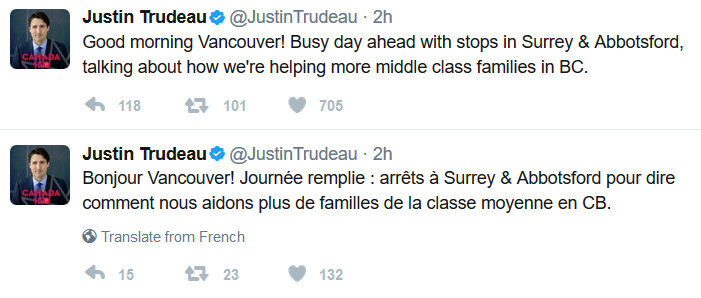
How often does a senior member of government stop you and ask you about your concerns? How often have you sent a letter or E-mail into a government office, only to find that it has disappeared into the depths of an in basket somewhere? How often have you followed up on said communications, only to find that your efforts were ignored?  How often have you seen your E-mails deleted before they were even read by a government official?  (This happened to a retired Canadian diplomat in the Duncan area who wrote to his Federal MP.)  How much have you been able to say when you shook hands quickly with a politician at a private or public function?

A year ago I was invited to attend a meeting at Premier Clark’s office along with 16 other women who publish online content.   Many of the women had been nominated in the online community to be Top Mom Bloggers in Vancouver.  I knew that the meeting would touch on topics important to parents, mothers and women, and was pleased to have the opportunity to attend the event.  My mother-in-law was kind enough to help look after my 2 1/2 year old twins in an adjacent office space within the Premier’s office while I sat in on the meeting.

In the days leading up to the meeting, I spoke with parents and reached out via social media to hear what information community members would like me to pass on to the Premier and her colleagues.  Some people I know reacted with muffled amusement when they heard that I would meet with the Premier.  Although it hardly seems fair, there is a sport in BC called “crack jokes about Christy Clark and Adrian Dix”.  You could imagine the type of “how naive she is” thoughts that were racing through their minds.  Detractors will counter that the meeting was a PR ploy to encourage women like me to champion the work of the Premier and her colleagues. I saw the event primarily as an opportunity to bring the message of British Columbians to the table.  Based on conversations around the table, the other invitees felt the same way.  Many of the women who attended this meeting, and subsequent meetings, will vote for the NDP in the 2013 election.  In this meeting the Premier wasn’t preaching to the choir.

During the meeting I had the opportunity to raise the concerns of other people who couldn’t be there, including dads.  I heard the Premier’s response.  I replied  – not always agreeing with the Premier’s perspectives.  We had an intelligent and respectful exchange.  I felt that I was heard and was able to look at how the issues we discussed came up in the weeks that followed.  One of the topics I raised was referenced by the Premier when she discussed the meeting on Twitter.  I discussed specific concerns families had mentioned regarding the Port Mann bridge, and the needs that outlying cities with growing populations face to provide services for children with special needs. (EG mental health or speech language services.)

Since this meeting I have been invited to a few events organized by the Premier’s office. Most recently I was invited to meet with one of the Premier’s colleagues whose portfolio focusses on topics related to my professional training. Due to childcare constraints I have not been able to attend any other events.

In the months that have followed since the meeting in 2012, I have often thought about these opportunities and have noted some of the conversations that have taken place in the print media and online.

* Both men and women have concerns about their children. Mothers have concerns that reflect a woman’s role as mother and also as an employee who works outside of the home part-time or full-time.   Childcare concerns affect children and families but have a unique impact on a woman’s options for her career and her pension.

* I was invited by a colleague of the Premier to attend an event downtown as an observer. It was made clear to me that I would not be sitting in the main meeting room. Instead I would be in a smaller, secondary room and would have the opportunity to follow the event and share information about it online.  It is common nowadays to have a group of social media publishers at events who are not paid journalists.  You wouldn’t think that this would be a controversial invitation. Months later the guest list for this event was shared online.  The inclusion of details regarding the invitation of “mommy bloggers” was meant to be a critique, not a statement of fact.  One commentator on Twitter wrote that mommy bloggers are hardly experts.  I confirmed that my name should have been on the guest list too but I declined early on.  I explained that the terms of the invitation were different from what was being portrayed.  I received no response.  Its seems that it’s easy to put a spin on something but doing the right thing and correcting misinformation is not considered necessary.

* As I read online reviews of the meetings at the Premier’s office written by women who attended, my initial observations were confirmed.  Not all of the women who attended are card carrying members or supporters of the BC Liberal party.  Their follow-up pieces were not advertorials for the family-focussed initiatives of the Premier’s office.

* In the meeting I noted that the invitees came from a variety of professional backgrounds. Some worked at home full time while others worked outside of the home full time. One woman spoke about how her blog focusses on children with a specific special need.  Another woman brought up the need to support women in social media and entrepreneurial jobs in a manner similar to what is being done in Ontario.  She explained how it made more sense for her to run her business in Ontario than it did in British Columbia.  There was a discussion about the need to support entrepreneurs and the training of women seeking to enter/re-enter the workforce. Other women gave pointed examples of how the cost of living and cost of childcare is prohibitive in BC.  One woman shared how she had to keep her child in a daycare for six months, even though she didn’t feel fully confident that the quality of the centre was acceptable.  She ultimately made changes to her professional life in order to take her child out of this daycare. There was also a discussion about women working in specific professions where there has been a notable exodus from the profession, post birth of a baby.

* My attendance at this meeting gave me an opportunity to meet women I had only connected with online.  Contrary to what is shared in the mainstream media and online, moms who write online do address topics that aren’t blog-lite.

Canadians  have the ear of municipal, provincial and federal politicians all the time.  Some even make a living meeting with politicians on a regular basis in order to present the ideas of their interest groups.  These people make no apologies for taking up the time of politicians in order to present their concerns.  Like their counterparts in other business and political circles, female bloggers should make no apologies for taking up an offer to present the concerns of their fellow parents, including moms who work outside of the home or in the home full time.

The message I received before and after the meeting with the Premier was that for various reasons I shouldn’t have talked with Christy Clark.  Other than the invitations from the Premier’s office, I haven’t had the opportunity to cross paths with any BC Liberal OR NDP politician.  During the run-up to the 2013 election, no volunteers or candidates visited my neighbourhood or called my household. The next time I am invited to shared my concerns and those of the people I hear from in the community with a politician, and assuming I can attend, I will accept.

You can comment about this posting using the comment function below or by visiting the BC Family Facebook page. Your opinion matters so don’t be shy!

Related

“The aim of the event was to connect local moms to the Premier, so that she could hear what’s on our minds. It’s not every day you’re invited to meet with a Premier. As we said, we couldn’t pass up the chance to ask our questions, share our concerns, and propose some ideas for how the government could make our lives better. ” Excerpt from Round Table With Premier Christy Clark

“I am not what you would call a Christy Clark supporter (although I’m not a supporter of any other party leaders in my province, either). On the two occasions I’ve met her, I did that mental calculation, and decided that I would accept the bargain that comes with any PR pitch. The opportunity outweighed the downside. I understand that some people may attribute certain political leanings. While that’s not the case, I can accept that. I am willing to own my decisions. But I think it’s interesting how the PR ploy (which it surely is) is pointed out when there’s a politician involved, while no one called PR ploy on my free ferry passage to Victoria earlier this month to cover an exhibit at the Royal BC Museum.” Excerpt from Public Relations, Premier Christy Clark and Me

“The people I have met through blogging have helped me create new ways to form my own business that works around my family. Many other women have gone much further than I and are in the middle of amazing digital media empires and or fantastic writing careers.” Excerpt from Mommy Bloggers Are Working Women Too

“Not being a huge Liberal supporter, I was wondering what the atmosphere would be like…how much of a ‘please vote for me’ atmosphere this meeting would have. I was totally wrong. Christy and Pamela were cordial and quiet. They listened, offered feedback, asked questions, and were pretty honest in my opinion. [...] What we had at that table represented the variety of women who happen to be mom’s who happen to love the internet in all their glorious diversity.” Excerpt from Speaking Our Minds

“Clicking through the site is even more revealing… the Blogroll is a collection of banana bread, granola friendly fashionable motherhood sites to foodie hangouts, to arts and crafts and more…. [...]  I happen to be a mother, and in no way am I attempting to disparage any of the mommy sites* ( or others) that the government site links to.   They aren’t my ‘thing’ but I do recognize many mothers, particularly new moms, gravitate towards these sites  to connect with other moms, find tips, recipes, etc… ” Excerpt from  Clark tries new tactic to woo women back into the fold with Über-mommy friendly website – paid for with your tax dollars. * BCFamily.ca is a link on the website mentioned in this piece. Apologies for not providing enough tips!

A response to the previous piece.

Gender gap poses massive hurdle for Christy Clark. B.C. Premier makes efforts to appeal directly to women

“So, are mom bloggers exercising political power? As it turns out, they don’t blog about much that you’d call political.* They’re generally not endorsing candidates or advocating for legislation. Instead, their topics are often mundane — recipes, shopping, cute things the kids did, pets, frustrations — and also personal: depression, sex, drinking, rage, boredom, self-doubt.” Excerpt from  Michaud: Can Mommy bloggers harness their political power? *See example from BCFamily.ca – a typical site geared towards family-focussed individuals.

Results from the 2009 Provincial Election show that almost half of the eligible voters in British Columbia (49%) and over 500,000 British Columbians under the age of 34 didn’t vote.  This is almost identical to recent results in provincial elections in Iraq where a little over 50% of the population voted.  Iraqis are deeply disillusioned about the political process and corruption.  Voter turnout has plummeted since 2009 when, compared to British Columbia’s low turnout, 72% of Iraqis voted.  There have been eight elections in Iraq since 2003.  During elections it has been a common occurrence to see bombings that kill citizens.  In the most intense period of violence in the mid 2000s, the voter turnout was well over 60%.  Citizens  literally put their lives at risk in order to exercise their democratic right to vote.

Looking beyond the reasons why citizens are disengaged from the political process in British Columbia, there is also the added concern that some sectors of our society are more prone to low voter turnout.  The results published in the recent Canadian census – now voluntary – indicate that there was a low participation rate in the new immigrant, aboriginal, senior citizen and at-risk women communities. These are the people whose voices need to be heard the most.  Different political parties form governments that can have a strong impact on how the Canadian social contract is protected, strengthened or eroded.

What would have happened if the 49% of British Columbians who didn’t vote had actually voted in 2009?  If most of them had voted for the NDP, we would have a different government today.  If more people who support the Green Party’s platform registered their vote, British Columbians might be more amenable to voting Green based on a healthy result in 2009.  Journalists often track the rising popularity of a party based on previous election results.  If you vote for a candidate that isn’t successful, your vote still makes a statement and helps to influence subsequent voting patterns.  Members of the BC media have been telling British Columbians for months that they will be voting NDP.  When British Columbians vote this month they will show that journalists were right – or that they were wrong.

Most of us have a good idea about the political vision that we prefer.  Political parties like to believe that in addition to swing voters, there are a good number of people who can be swayed to vote differently after watching a political ad or seeing an All Candidate debate. We often hear that allegiance to one party can be easily shifted to another.    Are the BC Liberal party and the BC NDP party that similar?

The British Columbian version of the Vote Compass survey will help identify where voters fall on the political spectrum.  If a result comes out a little bit different than expected, check out answers against all of the answers for each political party.  This will help to understand how a final result came together.  The range of topics covered in the survey will also give an overview of some of the hot topics being discussed in this election.

In the days leading up to the election we can encourage friends, family and colleagues to vote.  We can encourage them to take the Vote Compass test as well.  If you are on the fence about voting  on May 14th, consider that Advance Voting for the 40th Provincial Election will take place from May 8 to May 11th, 2013.   Polls will be closed on May 12th and 13th. Advance voting is a convenient option for people who don’t want to line up later in the day on the 14th.

What matters most are not efforts to convince people to vote a certain way but simply to encourage or convince people to vote.  A high voter turnout will result in a general consensus that the election result represents the preferences of British Columbians from all socio-economic backgrounds.

Start the conversation now. Encourage others to rock the vote.  The polls open at 8 AM on May 8th and close at 8 PM.

You can comment about this posting using the comment function below or by visiting the BC Family Facebook page. Your opinion matters so don’t be shy!

Related

Vote Compass BC Survey

Add yourself to the Elections BC Voter List

Rock the Vote BC video ad about the election (focussed on University and College students).

What to expect when you vote. (Video for first time voters.)

Find out where to vote.

Elections BC website (If you haven’t received your Where to Vote card, contact this office.)

Elections BC on Facebook

Elections BC on Twitter

A social contract for the 21st century.

American video encouraging you to get out and vote:

Image from a bombing in the 1970s.

Pamela Chan, BCFamily.ca

The recent bombings at the Boston Marathon, the shocking video footage of explosions next to a crowded sidewalk and the resulting deaths and injuries are a stark reminder of the terrifying reality of bombings that take place worldwide. On the same day that the bombs detonated  in Boston, bombs killed at least 33 people in a number of locations around Iraq.  This has been an ongoing threat in Iraq for many years. It is estimated that there are approximately 130 armed conflicts every year, worldwide.

In my early childhood, one of my immediate family members narrowly escaped a bombing.  (See link to video).   On the day that four bombs were detonated, 33 people died – including babies and an unborn child. (See photo above.)  A 5 year old boy suffered life-threatening injuries and recovered. At the exact time that my relative was supposed to be at the site of one of the bombs, a “feeling” to not go there was the saving grace. Call it psychic powers, Scottish intuition or the “Holy spirit” – we would not be the family we are today if that “thought” hadn’t happened.  When you live with daily fear that another bombing could harm one of your family members, PTSD (Post Traumatic Stress) can develop.  The residual effect of the bombings last for years, even if you aren’t hurt at the time.

As a family we managed to avoid such a close call to bombings in the ensuing years.  One year an incendiary device was thrown on the path next to my parent’s office.  A school that I attended overseas was rebuilt and was later partially destroyed by bombs, torched and looted.   I experienced regular bomb threats at another school that I attended, but no bombs were ever found.

A friend once told me that her mother was thrown over a shop counter as a result of a bomb in Israel. She was seven months in utero at the time. A CBC journalist who spent a number of years living in Israel with his family once described how he and his wife would mentally draw a line that delineated the areas of the city where they would feel safe to go and which regions they would avoid. If a bomb went off in an area considered to be safe, they would redraw the line.

A few years before she died, Princess Diana took the provocative step of campaigning against land mines, which are explosive devices concealed under the ground that function like a bomb. It is believed that her work influenced the signing of the Ottawa Treaty, which took place after her death.  The treaty created an international ban on the use of anti-personnel landmines.  (The Treaty excludes anti-tank mines and cluster bombs.) In a key note address in 1997 Princess Diana said:

“Even if the world decided tomorrow to ban these weapons, this terrible legacy of mines already in the earth would continue to plague the poor nations of the Globe. ‘The evil that men do, lives after them ……’  [...] And so, it seems to me, there rests a certain obligation upon the rest of us…… I think we owe it.  [...]  The more expeditiously we can end this plague on earth caused by the landmine, the more readily can we set about the constructive tasks to which so many give their hand in the cause of humanity.”

Immediately following the bombings in Boston, the news media reported how people on site who were not hurt ran towards the bomb site to help the victims.  They didn’t know at the time if there would be more bombs and were focused exclusively on the need to help.  Similarly people will show defiance in the face of a lack of mutual understanding, hatred and other dark emotions that motivate people to hurt others physically and psychologically in the name of a cause, belief or world view.   King of Queen’s star Patton Oswalt shared his perspective on social media:

“So when you spot violence, or bigotry, or intolerance, or fear, or just garden-variety misogyny, hatred or ignorance, just look it in the eye and think, ‘The good outnumber you, and we always will.’ “

In The Art of Thinking Clearly Rolf Dobelli writes that news makes us passive. “News stories are overwhelmingly about things you cannot influence. The daily repetition of news about things we can’t act upon makes us passive. It grinds us down until we adopt a worldview that is pessimistic, desensitized, sarcastic and fatalistic. The scientific term is “learned helplessness”. Our individual choices about the information we seek out, and the actions we take in response, on a personal and group level, can combat any feeling of helplessness that we might develop.  We might not be mounting a campaign against land mines, as Princess Diana did, but we will encounter opportunities in our lives to champion goodness in our communities.   The justifications for bombings around the world are rooted in a diverse range of intellectual, emotional and psychological states of mind.   We encounter perspectives such as intolerance  on a regular basis – in person and online. To effect change we can consider joining a community of like minded individuals – in person and online – and pool our resources.  Collectively the efforts of individuals – working together or alone – do matter. As cultural anthropologist Margaret Mead famously wrote, “Never doubt that a small group of thoughtful, committed citizens can change the world. Indeed, it’s the only thing that ever has.”

You can comment about this posting using the comment function below or on the BCFamily.ca Facebook page. Your opinion matters so don’t be shy!

Related

The Aftermath:  What I Learned From the Boston Bombings (GoodMenProject.com)

What Are You Able to Do? [During a crisis.] (GoodMenProject.com)

Princess Diana’s Key Note Address About Land Mines

Postcard image source

Images of Freedom and Repression from Freedom House

The number of congenital hypothyroid (CH) cases in Alaska, Washington, Oregon, California and Hawaii [following the Fukushima Daiichi nuclear meltdown] [...]  increased by 28% in the period March 17-June 30, 2011. Radiation and Public Health Project report, January 2013

In March, 2011, the news of the earthquake and related tsunami in Japan reached British Columbia late at night.   “Are you awake?”, I asked my husband. “They’ve just had a large earthquake in Japan!”  Three months earlier I’d had a vivid dream about an earthquake and related details affecting both Tokyo and the countryside.

As the days passed I started to wonder how radiation fallout from the nuclear plants would affect people on the west coast – specifically children?  What kind of plan di the BC and Canadian government officials have?  I suspected they probably wouldn’t tell me but I decided to ask the offices of government representatives. I also reached out to the mainstream media to ask this question.  Within a day I was interviewed for a local and national programme.  I felt the interview went well and that I had a good rapport with the interviewer, who is an experienced journalist.

Trying to decipher the scientists’ analysis of the situation at the Fukushima Daiichi plant was challenging.  On the one hand a Canadian science consultant explained the events by using drinking straws, reassuring us that there were no concerns. Nothing could possibly happen that would have a serious impact on the west coast and Canada.  Meanwhile an MIT expert said that there has never been a situation involving so many old reactors grouped together that were not built to the modern, recommended safety standards.  Their assessment of the outlook seemed less certain.  As for the Canadian Government, I understood that Canada is the second largest exporter of uranium. Could their comments ever suggest that there are concerns about the safety of nuclear plants?

Over the years I have read a number of endocrinology research papers and can hold my own in a medical conversation about topics that also touch on hypothyroidism.  Due to personal health reasons, I am the last person who should be taking potassium iodide.  If I did take it, I would need to be closely supervised by a specialist.   Additionally people in my age group are the least susceptible to disease post nuclear fallout.  (My explanation in case anyone thinks I was chomping at the bit to get hold of this product and self-medicate.)

As my children were two at the time of the Fukushima meltdown, I was aware that the smaller bodies of children make them more susceptible to disease caused by radiation fallout.  Here is an explanation why children are more vulnerable, provided by the US Environmental Protection Agency:

Children are growing more rapidly, there are more cells dividing and a greater opportunity for radiation to disrupt the process. EPA’s radiation protection standards take into account the differences in the sensitivity due to age and gender.  Fetuses are also highly sensitive to radiation. The resulting effects depend on which systems are developing at the time of exposure.

The first population that would need treatment if radiation levels increased would be children.  Thinking back to the hit-and-miss services available for H1N1 vaccine, I wanted to know if the BC and Canadian Governments had a plan regarding a potential roll-out of treatment for the most vulnerable members of the population.  I was also thinking about the needs of people in more remote communities such as Haida Gwaii or Burns Lake – not just the people living in Metro Vancouver.  How efficient would delivery of potassium iodide be in rural locations?

In Spring, 2011 and for some time afterwards I encountered these types of reactions following my interview:

*   “You should worry about the poor people of Japan, not people in the Pacific Northwest.”

-  I was probably more impacted, emotionally, by this event than the average person as I’ve spent a decade living, studying and working in Japan.  They chose the wrong person to assess as being unempathetic and self-interested.

*  “The people in Japan need the world’s supply of potassium iodide.”

-  There was no indication that there was a worldwide shortage.

* “The Government says there isn’t a problem, so there isn’t one.”

- There were differing  opinions being offered by senior science experts.

* “Weren’t you on the news awhile back?” [Accompanied by cheeky grin.]

- Early attempts to flesh out the conversation were met with distracted attention.  Perhaps I should have shared a 140 character tweet in response, smart phone to smart phone. Eventually I chose to not respond.

*  “See. Nothing happened”. [Mentally insert - "you made a fuss for nothing."]

-  We now know that the situation at the plants was very close to being much more serious.  November, 2011:  “The stricken Fukushima Daiichi nuclear power plant came a lot closer to a full “China Syndrome” meltdown than previous company analyses had indicated, though there is no danger of further damage now, plant operator Tokyo Electric Power Co. (TEPCO) said Wednesday.” (Excerpt from Washington Post story, still available for free on the New York Post website.)

The most galling assessment was one that came by way of the television news story that featured my interview.  While I was coherent, clear and – as I like to say to combat gender stereotypes – being “very male” about my concerns, somebody edited the voice over to say that I was “scared”.  How could the journalist involved have concluded that I was “scared?!  “Concerned” would have been a more appropriate word.

Apparently it’s unusual for an average citizen to ask a question about the emergency response planning process. Years of earthquake preparedness training, and Standard First Aid and Light Urban Search and Rescue courses must have made me more vigilant.

In the story of the Fukushima Daiichi accident, the earthquake and the tsunami there was a valuable learning opportunity to cover stories that looked at aspects of preparedness and survival both in Fukushima and in the larger nearby metropolis of Tokyo and Yokohama.  After all – we do live in an active earthquake zone here in British Columbia and we are much less prepared than they are in Japan.  I heard, and continue to hear, many noteworthy stories from friends, journalists and former colleagues  that aren’t discussed by international journalists.

In January 2013, a paper was published with findings indicating that there was a 16 – 28% increase in incidences of hypothyrodism amongst babies born on the west coast of North America following events in Fukushima. The paper does not include data from British Columbia, but follows results in Washington State and Alaska.  The very smallest of children – babies in utero  -  appear to have been affected by the lower levels of radiation that came to our shores from the Fukushima Daiichi plant.

When I read the research findings to a family member over the phone, the first thing he said was “so you were right all along.”

What matters is that we should always feel empowered to question experts – especially if one group of experts isn’t agreeing with the other.  We should seek out primary documents when assessing news stories. (I have read the full research paper online – as can anyone else who is interested.)

We should feel confident to contact government officials to ask for more information. In a recent interview with George Stroumboulopoulos, CBC journalist Carol Off explained that in the United States citizens are naturally dubious of Governments and feel that as taxpayers they have the right to be fully informed.  Whereas in Canada, Off explained, we assume that if we don’t hear information from government officials it’s because we don’t have the right to know.

We shouldn’t be ridiculed or silenced if we exercise our right as a citizen to ask questions and challenge official statements, or a lack of information.

We have to accept that if we put our concern, question or story in the media spotlight, we don’t control over the final editing and presentation that is shared. My family member (as per my recent phone call), warned me about this eventuality before the interview.  He was also right all along.

Is this the final word on the effect of low level I-131 exposure on children? Debates will be inevitable.  One commentator had this to say about the news release regarding the study:

What the abstract ended in saying was further study is needed to establish a relationship between the fallout and an increase in hypothyroidism. Don’t jump to conclusions until further study has been done! You are taking the abstract out of context!

A full copy of the Radiation and Public Health Project report (not just the abstract) is available online. (See Related below.)  Here are some statements and findings from the report:

Possible explanations for this finding should be considered.  Prior research has shown that certain demographic groups are at greater risk for CH, including female births, Hispanics, Asians, and births to older mothers.  However, it is highly likely that distribution in gender, race/ethnicity, or maternal age changed little from 2010 to 2011.

Knowing the number of live births and calculating CH rates could change the results, but the official estimate that live births will decline just 1 percent from 2010 to 2011  makes this unlikely to explain the difference between the two groups of states.

Numerous reports have identified elevated disease risk from low radiation doses previously believed to be non-hazardous, or at least not able to be calculated using standard  research methods.The consensus from results of these and other studies was that risks to health of radiation exposure follows a linear no-threshold model, even at the smallest doses.

A well-documented risk factor affecting CH is exposure to the thyroid-seeking iodine isotopes such as I-131. Previous sources have linked elevated risk for hypothyroidism with nuclear weapons tests and nuclear power installations.

In the US, government officials measured concentrations of I-131 in precipitation up to 211 times above normal during the weeks following the meltdowns.

There were increased concentrations of all beta-emitting radionuclides in the air during the six weeks following the beginning of Fukushima fallout. Compared to the same period a year earlier, the fallout increases were more than seven times greater in the five Pacific/West Coast States, compared to just over two times in the remainder of the
US.

The largest gap between the two groups of states occurred in the period March 17 to June 30, which represents fetuses exposed to environmental radioiodine during the third trimester of pregnancy.

States were asked to provide only confirmed primary CH cases; these are newborns who test positive for the condition, and require therapeutic intervention to avoid adverse health effects.

All US newborns diagnosed with primary CH born March 17-December 31, 2011 were exposed in utero to radioactive fallout from the Fukushima meltdowns.

[The data in this paper requires] confirmation and expansion, including long-term follow-up of infants and other children. However, the current findings should be noted, and encourage the conduct of future analyses of health effects from exposures to Fukushima fallout.

You can comment about this posting using the comment function below or by visiting the BC Family Facebook page. Your opinion matters so don’t be shy!

Daily Dish Archives: Pamela Chan, BCfamily.ca

Related

Elevated airborne beta levels in Pacific/West Coast US States and trends in hypothyroidism among newborns after the Fukushima nuclear meltdown., Joseph J. Mangano & Janette D. Sherman

Fukushima fallout may be causing illness in American babies: Study

Details about this research paper and other related findings from the Natural Society website.

Fukushima fallout sickens US babies?

A Year After Fukushima: How Life Has Changed For People in Japan

Could Iran be the location of the next nuclear reactor accident and radiation spill (affecting Middle Eastern countries to the south/southwest? (Foreign Policy magazine)

Good-bye Dubai? Bombing Iran’s Nuclear Facilities would leave the Entire Gulf States Region virtually Uninhabitable

What do you get when you combine a local Oscars Party with a community fundraiser?  Here in Coquitlam, in the Tri-Cities area near Vancouver, there’s an annual Oscars Party fundraiser that turns watching the Oscars into an event.

For the third year running, the Tri-Cities Oscar Night will take place today (Feb. 24/13) at 4 PM,at the Coquitlam City Hall Council Chambers.  Coquitlam Counsellor Selina Robinson, Port Moody Councillor Diana Dilworth and event planner Polly Krier will host the event.  Funds raised will support the Coquitlam Foundation, Port Coquitlam Foundation and Port Moody Foundation.

For more information about the event, check out a recent story from The Now Coquitlam newspaper.

This event is an example of the creative and artistic community events that are regular fare in this part of the Lower Mainland.  If you’re looking for a place to live near Vancouver that has great community spirit, easy access to downtown (think SkyTrain & Westcoast Express), more affordable housing options and a wide variety of cultural and sporting activities, you should be checking out the Tri-Cities area of Port Moody, Port Coquitlam and Coquitlam.

Related story from The New Coquitlam newspaper

You can comment about this posting using the comment function below or by visiting the BC Family Facebook page. Your opinion matters so don’t be shy!

A few days before the much anticipated Paul McCartney concert in Vancouver, I visited Tim Hortons with my husband and three year old twins.  At the next table a frail and elderly man sat with two caregivers.  He had a walker nearby, spoke and walked slowly and had long, uncut hair.  Most of the time he sat bent forward, looking at the table.   As I was waiting for my husband to return with our food, I couldn’t help overhearing his comment about one of my 3 year old twins.  “He looks like a young Paul McCartney”, he told the women.  It seemed that Sir Paul’s highly anticipated arrival, after a 48 year absence, was on everyone’s mind – even a man who is living a quiet life in a care home.

When my husband returned, I repeated the comment and he nodded and smiled in response.  He has been a life-long fan of the Beatles and the individual artists who made up the group.  Since his childhood he has collected their records, CDs and iTunes and appreciates the artistry in their musical compositions and lyrics.  “Their accomplishments have never been surpassed”, he tells me with confidence.   I owe Sir Paul and his colleagues my sincere thanks for giving website members early access to tickets.

(Click on image to enlarge.)

On Sunday night I donned the Union Jack t-shirt I bought, we drove across the Lower Mainland and left our children with family members who generously agreed to help babysit.  After a rare “date night” snack in our old stomping ground – Urban Fare -  we arrived early at BC Place.  It was immediately evident that the dominant age group in the crowd was 60 something.  Although there were a good number of people who were anywhere from elementary school age to under 50. Even though I have experience visiting the 50+ gated community where my parents live, I’ve never been surrounded by so many people from the older Boomer generation. In particular I noticed the way some of the women dressed with flair.  One woman had on grey ankle boots, that looked like they were made of lace, and a grey layered top that would be at home in a  designer’s clothing store in Tokyo.

Who are all these elegant people?, I wondered.  Are they lifelong Beatles/Paul McCartney fans like my husband?  Have they seen him perform before? Do they live around here?  What have they been doing with their lives while Paul has been furthering his career? What are they doing now?

While I observed people in the crowd, I was reminded that we live in a society that is fairly segmented.  Some of us beat a path to an office five days a week.  Some of us live somewhat isolated lives staying at home with young or elderly family members, while others are retired and pursue interests more unique to retirees.  We cross paths in our roles as child, parent, grandparent, family member or, perhaps, former colleague.  The Paul McCartney concert was a rare opportunity for a truly inter-generational crowd to come together.

Photo by Linda McCartney

During the hour before the concert started, a thought provoking collage of scanned photos, memorabilia and video clips scrolled vertically on either side of the stage.  It was a treat to see material relevant to a career that has spanned six decades and taken place around the world.  Sir Paul has played for thousands of screaming fans, royalty, heads of state, media personalities and average folks like me. During the show the multimedia presentation of photographs continued and was woven together with more abstract images, lighting and even pyrotechnics.  This celebration of photography is fitting as Paul McCartney’s first wife Linda was an accomplished photographer. In one set a beautiful photo (slightly different from the one shown above) and a video featuring Mary McCartney appear in the background.  The McCartney family photos are “heart stoppingly” beautiful.  At a time when it’s easy to snap a digital photograph, these photos are a reminder that it is important to take time to capture the quiet, intimate moments that we share.

She would have the camera with her but wouldn’t hold it up in your face for a long time, so she wouldn’t be clicking all around you – she’d chat with you, take a snap, put the camera down, so you didn’t have time to start posing and feeling self-conscious. She never intimidated people. (Mary McCartney speaking about her mother, Linda McCartney)

For well over two hours Paul McCartney stood for more than half of the time, jumped up and down, raised his guitar in the air repeatedly with one hand and sweated, visibly, while playing tunes like Live and Let Die.  We didn’t see him take a sip of water once. If you are looking for a poster boy for the healthy, vegetarian lifestyle beyond 60, Paul McCartney is it.  From the start of the concert his familiar, casual and even flirty banter endeared himself to the crowd.  It was a rare opportunity to see a performer so at ease with his audience and exhibit such a degree of humility and sense of wonder about life.  It’s said that Sir Paul rarely gives interviews.  This is a shame because the stories he tells between songs are illuminating.  Before playing a solo rendition of Blackbird, he explained his thoughts about the civil rights movement in the United States and how he was inspired to write the song as a way to give hope to people who were oppressed.  If his daughters Mary and Stella could create a documentary that celebrates their mother’s photography; Beatles, Wings and Paul McCartney archival material; and, their father’s stories, they would end up with a masterpiece.

Image/video by Paul McCartney

Over the years Paul McCartney has worked with the most famous artists of his generation and has met artists around the world. A background video in the concert featured A-list – but somewhat private actors - Natalie Portman and Johnny Depp signing to the new song “My Valentine”.  (Just hearing their names announced, you couldn’t help but thing “aaah”.)  At one point in the video Johnny Depp plays the guitar.  Paul McCartney wrote the song for his wife Nancy.  The song was inspired by Nancy’s reaction when he apologized for the heavy rain that they were experiencing on their trip to Morocco.  The interplay of the video and the performance on stage was magical.

The day after the concert I showed my personal cell phone videos of various songs from the concert to my three year old twins.  My son (AKA the “young Paul McCartney) loves music and showed a lot of interest in details about the concert.  As he went to bed the day after the concert, he still had many questions about what happened.  (Five days later he has mastered how to say “Paul McCartney”, despite a speech delay, and is still grilling me about the musicians who played with Sir Paul.  Alas mummy isn’t as up on the details as daddy. “What’s the name of the drummer?”  ”What kind of guitars did they play?”) While I played the videos for the twins the next day, their heads and bodies swayed and my daughter pretended to play the piano on the table top.  Suddenly they both jumped up and rushed for their toy piano and guitar.  As Paul McCartney makes his way on his world tour, at 70 years young, he is already inspiring a new generation of musicians.

If you are wary about the prospect of entering your eighth decade and beyond, take the time to get to know the lives, work and insights of people like Paul McCartney; your neighbour; an elder in your spiritual or volunteer community; Mother Teresa, who began her mission in India in her 40s; or women like Mary Delaney, who started her major life’s work two hundred years ago  at the age of 72.  We live at a time when there is respect for older generations but we tend to focus on the accomplishments of the young.  While it is true that the human body does become more sensitive and prone to frailness as we age, as Paul McCartney proves, our vision for our work and projects, creativity and ability to inspire only grows stronger year after year.

Related

Vancouver Sun review of the show.

Paul McCartney Vancouver 2012 concert review

“I will never recover from seeing Paul McCartney”. (Vancouver Sun reader review)

Photos of Paul McCartney at the Vancouver concert.

Paul McCartney singing Mull of Kintyre in Vancouver.  (Apparently he rarely performs this song live.)

Set list information

You can comment about this posting using the comment function below or by visiting the BC Family Facebook page. Your opinion matters so don’t be shy!

Daily Dish Archives: Pamela Chan/Publisher, BCfamily.ca

This short clip provides a less common view of audience participation, from the perspective of a concert goer.  It has been shared as a compliment to this piece.

In the spirit of the Bullying Summit taking place in Vancouver today, here are a few questions one might pose that are a shift off of the more common “are you or have you ever been bullied?” question.

* Were you ever isolated, ignored, treated like or told that you were weird and or “different” when you were in school?

* How did this make you feel? How did you react? How did others react?  Did anyone support you? What did your friends and family members say to you about this treatment?

* What were the long term effects of this treatment?

* Was this treatment done face-to-face or behind your back?

* Were you told privately or was this information shared in front of other people/shared with other people?

The McCartney quote is a fine reminder that an intolerant attitude regarding how one person is different from another can lead to bullying.  “You’re weird” statements can quickly develop into taunting, isolation and more serious forms of bullying.  This type of intolerance can also lead to division in social and public circles that can continue into the adult years.  If you have ever been “unfriended” on Facebook because someone, for example, didn’t like the status update you shared about a political topic, lifestyle choice or world view, you will have felt the sting of intolerance and a lack of appreciation of diverse viewpoints first hand.

Yet isn’t it people like Paul McCartney who dare to step out and BE different?  In the face of possible criticism and rejection they break the mold of how they’re supposed to be (read “like everyone else)” and forge their own path.  If being your own unique self is a bad and undesirable option, then it could be argued that “you’re weird” or “different” statements, and related social pressures to conform or disappear, are attempts to squash creative self expression and individualism.  Which path did you choose?

The words that Paul McCartney is purported to have said can be used to support efforts to honour others who are or were troubled  – often seriously – by this treatment and these judgements. If you wish you can copy the image above and use it as your Facebook profile photo or place it somewhere else on Social Media.

We can work together in small and large ways – at summits and in our personal modeling and conversations – to encourage youth, and the adults in our midst, to dare to be the people they want to be.

Let’s build a society where we truly embrace diversity and the dimension that it creates in our communities.

You can comment about this posting using the comment function below or by visiting the BC Family Facebook page. Your opinion matters so don’t be shy!

Related

Creative Brave Courageous and Free – a BC artist’s experiences related to this topic.

Dance to Your Own Beat Baby

Rick Mercer on Bullying Awareness Week and a video response.

Building Amanda’s Army

Let’s Talk: The Power to Redefine

A Local Tragedy Raises A Lot of Questions

Divided We Fall (Commentary by Rex Murphy, CBC)

“Amanda Todd…your story has inspired many people to make changes. Changes within themselves and in their communities. With this song, “Wonder Woman” we really tried to comprehend what you were going through. Kids today don’t have the luxury of going home and escaping the bullies. Bullies are everywhere. They’re on Facebook, Twitter, Myspace, Youtube…chat rooms.” Elise Estrada

In written and taped interviews given by Carol Todd, Amanda Todd’s mother, Canadians have heard about the many talents and interests of a BC youth who died after enduring years of cyber stalking, cyber bullying and face-to-face bullying by a stranger and her peers.  Amanda was a talented and active girl who was loved by many in her community.  As Carol Todd has explained, even her pediatrician committed to following her progress through her K-12 years, well beyond when most Pediatric doctors would keep a patient on his or her case load.

Late last week the Todd family shared a photo that music producer Adam Hurstfield snapped of Amanda with local recording artist Elise Estrada.  The photo is a reminder that Amanda took a keen interest in the music world and had developed her own musical talents. Adam shared his heartfelt response to Amanda’s passing in a Vancouver Sun article.  Elise, Adam and their colleagues have also shared a video of the song Wonder Woman which was written for and dedicated to Amanda. (See clip below.)

Here in Canada journalists, parents, teachers, administrators and – mostly importantly – youth have been grappling with the topic of bullying daily since the news of Amanda’s passing was shared.  It’s not the first time that this type of topic has come up and sadly, here in BC, it’s not the first time a youth has died as a result of bullying. However we are seeing, mostly recently in two cases in Ontario, that direct change is happening as a result of Amanda’s story.  Meanwhile students who might have bullied in the past are saying that they’ve had a change of heart after hearing Amanda’s story.

“If we can change behaviours about drinking and driving, if we change behaviours and attitudes around smoking, why can we not change behaviours and attitudes around bullying.—Bill Tucker, Thames Valley District School Board, Ontario

All over British Columbia, Canada and the world youth are saddened not only by Amanda’s struggles and passing, but also by their own personal situations.  Please share this music video in some way (by E-mail, on your social media home page, a Facebook Page or blog) to help support and encourage youth – many of whom might be suffering in silence.

“Maybe as parents we have to rethink this – to realize that while we put the computer in the kitchen or family room so we can watch what our kids are doing, in reality we are sending them out the door with a computer in their hand. [...] She was just a typical child but what happened to Amanda can happen to others and it can happen quickly.” (Carol Todd, Amanda’s mum, speaking for the first time publicly at the Mom Inc Movement 2012 Trade Show)

You can comment about this posting using the comment function below or by visiting the BC Family Facebook page. Your opinion matters so don’t be shy!

Related

Add your photo to the Just Like Wonder Woman online photo wall.

Please also see BCFamily Post: The Power to Redefine (Discussing when Carol Todd and Adam Hurstfield spoke at MIM2012)

Amanda’s Army: Song dedicated to Amanda Todd calls for people to take a stand against bullying.

Carol Todd’s 1st public speech (includes video) from the Mom Inc. Movement Trade Show 2012.

J K Rowling discusses current concerns about bullying and the concept of the threat to the  sanctity of the teenager’s bedroom in an interview.

Elise Estrada’s message about Amanda Todd, bullying and the Wonder Woman song.

Students in a Toronto school discuss bullying. (23 minute mark after 1st commercial break.)

A Local Tragedy Raises A Lot of Questions (What questions could members of the media and online authors ask about bullying?)

Links on the BC Family page following news stories on this topic.

Image: Amanda Todd and Elise Estrada (Source: Vancouver Sun online)

It seems hard to believe that the Tri-Cities area of Metro Vancouver and, more specifically, a young resident who recently passed away have become the focus of international attention.  Harder still, it is hard to accept the reality that a young teenage girl passed away recently after enduring four years of exploitation by an unknown person and online/face-to-face bullying by her peers.

Last night, while watching CBC The National, it might have seemed extraordinary to viewers that a CBC news team was sent to the home of a man who was “outed” by an anonymous “hactivist” Internet group.  The group said they had completed investigations and determined that he was at the heart of the abusive actions taken towards the victim in this case.  Why did this news team believe this tip considering the family had indicated investigations were pointing to an individual in another country? Meanwhile the local police have not shared any information about any suspects that they had. Today the police confirmed that this type of “information sharing” was distracting their efforts to investigate the death of Amanda Todd.

One of the things was to get her off Facebook, that was really difficult, it was like an addiction to her. Eventually we took her computer and shut it down for her. But he would lie in wait for her and he would be there. Somehow he would follow her. Carol Todd (mother of Amanda Todd)

Kids find them (tiny chat rooms) and they just go wild on it. [...] They think it’s another 15-year-old. Someone said she was pretty. It’s like with kids, trying to entice them into a car with candy – with teenagers, you can entice them with sweet words. Carol Todd

There are many more angles that journalists could be investigating, in relation to this case, that respect the feelings of the family and community involved and do not involve topics that are in the early stages of investigation and discussion.  They are more global topics that, while part of this particular case, do relate to the broader experience of youth.  Certainly local print and TV journalist and national journalists (including those who file for CBC The National) are looking at these issues. These questions are informed by information that has been provided by primary sources such as the parent in this case and the police.

Here are a few that come to mind:

*  how are teenagers meeting in online chat forums?

* what types of forums are popular?

* what type of personal information are youth sharing about themselves in these chat forums that they shouldn’t be sharing?

* what do we know about sinister elements that can exist on these forums? For example, people 18+ posing as a youth?

* has participation in these forums caused concern in other jurisdictions?

* what do we know about predatory activity on the Internet that targets young girls and boys by way of online forums and other Internet sites? (The mother in this case mentioned this connection in an interview with a local paper.)

* what relationship does this predatory activity have with p*edophiles and the distribution of illegal images of children (commonly referred to as child p*ornography?  Note: some people do not like this term as it implies consent from the child.)

* how common is it for a youth to be pressured by an anonymous person online, using captured data as a threat?

* what are the other ways that youth are encountering trouble on chat lines and in other Internet forums?

* what are the different types of bullying and how does bullying look in face-to-face, one-on-one, group-against-one contexts?

* how does bullying differ from online exploitation, troll and flame activity online?

* how common is it for students to befriend a stranger on Facebook who claims to be a new student coming to a school? (Or a similar story line.)

* how common is it for groups of students to befriend complete strangers online (especially on Facebook) without knowing if they are who they say they are?

* despite all the warnings, how many students still have minimal security levels set on their Facebook and other social media accounts?

* how easy is it for a complete stranger to track down the whereabouts and related personal details of a youth?

* how common is it for young teens (below age 16) to be physically assaulting a fellow student, as a group, and leaving that youth abandoned on the side of the road?

* how common is it for this type of assault to be filmed?

* how do school districts react to this type of behaviour?

* if an attacked youth does not press charges is that the end of the story or can the authorities press their own charges?

* what do psychologists have to say about youth expressing pleasure that a fellow student has swallowed bleach, for example, or that he/she could  or should die?

* what environmental factors are supporting this lack of empathy towards others?

* what responsibility do providers of social media have to oversee how their sites are being used by the very young?  Are the measures that companies such as Facebook are taking enough?

* why do individual schools in Metro Vancouver have different policies about how to deal with children coping with the pressure of experiencing online exploitation, online bullying, face-to-face and peer bullying?

* what types of support systems are there for students and their families?

* are there other helpful services that could be provided in addition to those currently available?

* how can parents monitor online Internet usage by teenagers now that smart phones are popular?

* is pulling the plug on online participation a useful response to these types of experiences or is it too late once the problems have started?

* what do the Provincially funded programmes in existence or development provide for youth and families in need?

* what are the local programmes available that train and support youth so that they can protect themselves not only from bullying (face-to-face and online) but also from online exploitation by strangers?

* are youth interested to take these programmes? (A recent programme offering south of Vancouver required 8 students.  One signed up.  The programme was cancelled.)

* what are the resources that are being developed internationally that could support home-grown initiatives?

* how should members of the media approach and interview youth about these topics?  What types of questions should they not be asking?

* what are the most sensitive ways to provide youth with a platform to share their ideas, experiences, challenges and suggestions related to this topic?

* how are youth coming together to address the issue of bullying and online bullying and protection from exploitation?

* what are some of the most successful youth-driven programmes in BC, Canada and worldwide?

* how can British Columbian agencies combine forces with police forces and organizations in other countries (such as the United Kingdom).

The world is watching this story and as time passes Canadian news outlets will continue to monitor developments.  The questions that are asked can help to effect change and – more importantly – inform and protect youth.

It’s your turn. What questions would you ask, based on the information that has come to light related to Amanda Todd’s story?

Related

Video/interview with Carol Todd - Amanda Todd’s mum.

False information shared on the Internet distracts the police in their investigation of the Amanda Todd case.

Related stories in a local newspaper.

For more about online exploitation and related issues connected to this story, follow Gillian Shaw’s work at the Vancouver Sun.

YWCA programmes aid children in transition to high school.

12 Ways to Identify if Your Child is Being Bullied

We Were Bullies Website and We Were Bullied

Child Protection Online Videos developed by the United Kingdom police force. Please share. (A screen capture of their video is shown above.)

Initiative at The Province Newspaper:

Hands up.  Do you have friends who carefully chose unique baby names only to find that their choice turned up on the Most Popular Baby Names list? In some households this can happen more than once, despite the parents’ best efforts.  Isn’t it fascinating how a couple can choose a name because they like it, or it’s a family name, and it turns out to be a popular name when the child enters school. Olivia the cartoon pig had to contend with the shocking news that there will be  a second Olivia in her class.  Then there are the names that don’t appear on the top 100 – think Emmett and Wesley – until, without warning, they appear in the hot and rising name category.

It’s a funny business – choosing a baby name – but it’s also lots of fun.  Of course there’s also the cross-over possibilities for when you search names to use for your pet.  It’s always useful to have a list of favourite names on hand.

Here are the popular names for 2012, so far:

Girls: Alice, Charlotte, Frances, Hazel, Leonie, Penelope, Ruby and Wren.   Also popular: Fleur, Iris, Ivy, Juniper, Magnolia, Hazel, Ruby and Scarlet

Boys: Elliot, James, Kingston, Silas and Walter. Also popular: Gideon, Isaac, James, Jude, Hezekiah.

Nameberry.com hot names on the rise. Girls:  Blythe, Estelle, Aria, Ivy and Adelle Boys: Emmett,  Everett, Weston, Wesley, West, Grayson, Gray, Cyrus and Cato

What are your favourite names? Do you know if they’ve been popular over the years?

We’d love to hear from you so don’t be shy! You can comment about this posting using the comment function below or visit us at our Facebook page.

RELATED:

Hot baby names on the rise

Name dropping

This chart shows trends in the use of a name (in the UK) since 1996.

Related Posts with Thumbnails

© 2010 BC Family RSS & Privacy Statement Suffusion WordPress theme by Sayontan Sinha